Introduction: The $67,275 Question
What if a single $10,000 investment, left untouched, could grow to more than $67,000 over 20 years without you lifting a finger after the initial deposit? That’s not a hypothetical. At the long-term historical average market return of roughly 10% annually, that’s exactly what compounding can produce. Yet despite this well-documented power, a significant share of Americans remain on the sidelines, missing out on decades of potential growth simply because investing still feels intimidating, complicated, or reserved for the wealthy.
This guide breaks down exactly what investing is, how it actually works, why it matters more than ever in 2026, and how to get started regardless of your income level or experience.
What Is Investing, Exactly?
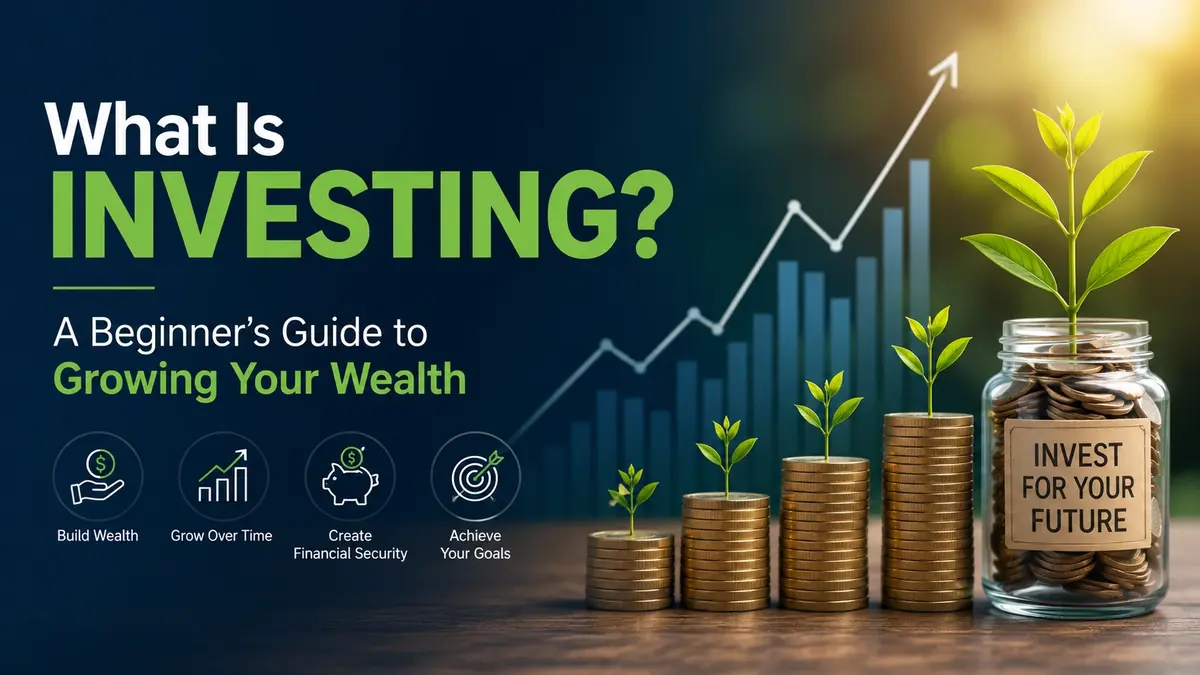
Investing is the act of allocating money toward an asset, such as stocks, bonds, real estate, or a business, with the expectation that it will generate income or appreciate over time. Unlike saving, which preserves capital in a low-risk, low-return account, investing accepts a degree of risk in exchange for the potential to grow wealth significantly faster than inflation erodes it.
The core distinction is simple:
- Saving protects what you already have.
- Investing grows what you have by putting it to work in markets, businesses, or assets that can appreciate over time.
Both have a place in a healthy financial plan, but relying on saving alone, especially in an economy where the average household savings rate sits near historic lows, leaves substantial long-term growth on the table.
Why Investing Matters More Than Ever in 2026
Stock Ownership Is Down And Unevenly Distributed
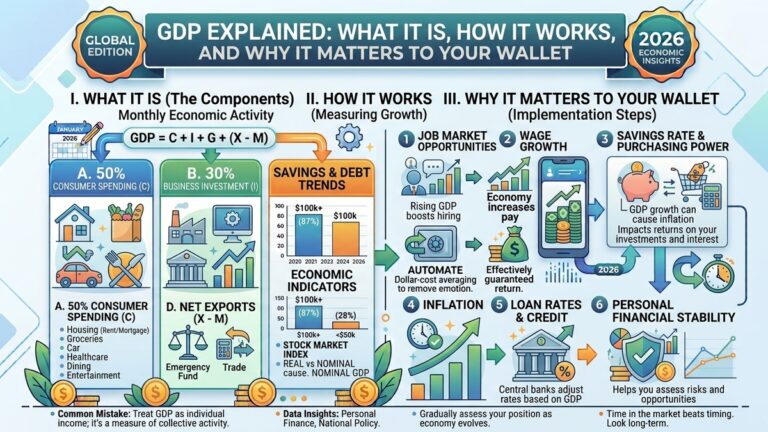
Despite the long-term benefits, participation in the market has actually softened recently. 58 percent of U.S. adults now invest in stocks, representing roughly 156 million Americans, down 4 percentage points from 2025. Ownership is also sharply divided by income: 87 percent of households earning $100,000 or more own stock, compared with just 28 percent of households earning under $50,000.
This gap compounds over time. The wealthiest 1 percent of Americans now hold 50 percent of all stock market wealth, worth roughly $29 trillion, while the top 10 percent control 87 percent of total stock value. Closing this gap starts with understanding that investing isn’t reserved for the wealthy; it’s a tool anyone with a consistent income can use, often starting with relatively small amounts.
The Cost of Staying in Cash
With the U.S. household saving rate sitting at just 3 percent in mid-2026, money parked in a low-yield savings account is losing real purchasing power to inflation over time. Investing offers a path to outpace that erosion but only for those willing to participate.
Retirement Savings Are Reaching New Highs, But Gaps Remain
There’s encouraging momentum in retirement investing specifically. 401(k) savings rates hit a record 14.4 percent of pay in early 2026, including employer contributions, approaching Fidelity’s recommended 15 percent target. Still, balances vary enormously: the average Vanguard 401(k) balance reached $167,970 at the end of 2025, while the median balance, a more representative figure, was just $44,115, reflecting how a small number of high-balance accounts skew the average upward.
How Investing Actually Works
The Power of Compound Growth
Compounding is the single most important concept in investing: it’s the process by which your investment returns generate their own additional returns over time. A $10,000 investment earning a 10 percent average annual return with no additional contributions grows to approximately $67,275 over 20 years purely through compounding. The longer money stays invested, the more dramatic this effect becomes, which is why starting early matters more than starting with a large sum.
Historical Market Returns
Long-term data offers a useful benchmark for what investors might expect from a diversified stock portfolio over time:
- Over the last 150 years, the S&P 500 has averaged a 9.53 percent annual return with dividends reinvested.
- Over the last 100 years, that average climbs slightly to 10.59 percent annually.
- Over just the last 10 years, returns have averaged 15.49 percent annually, though shorter windows tend to show more volatility and are less reliable as a planning assumption.
It’s worth noting these are averages, not guarantees. Stock market returns can fluctuate significantly from year to year, and all investments carry risk. There is no way to guarantee a specific return within a specific timeframe.
Asset Classes: Where Your Money Can Go
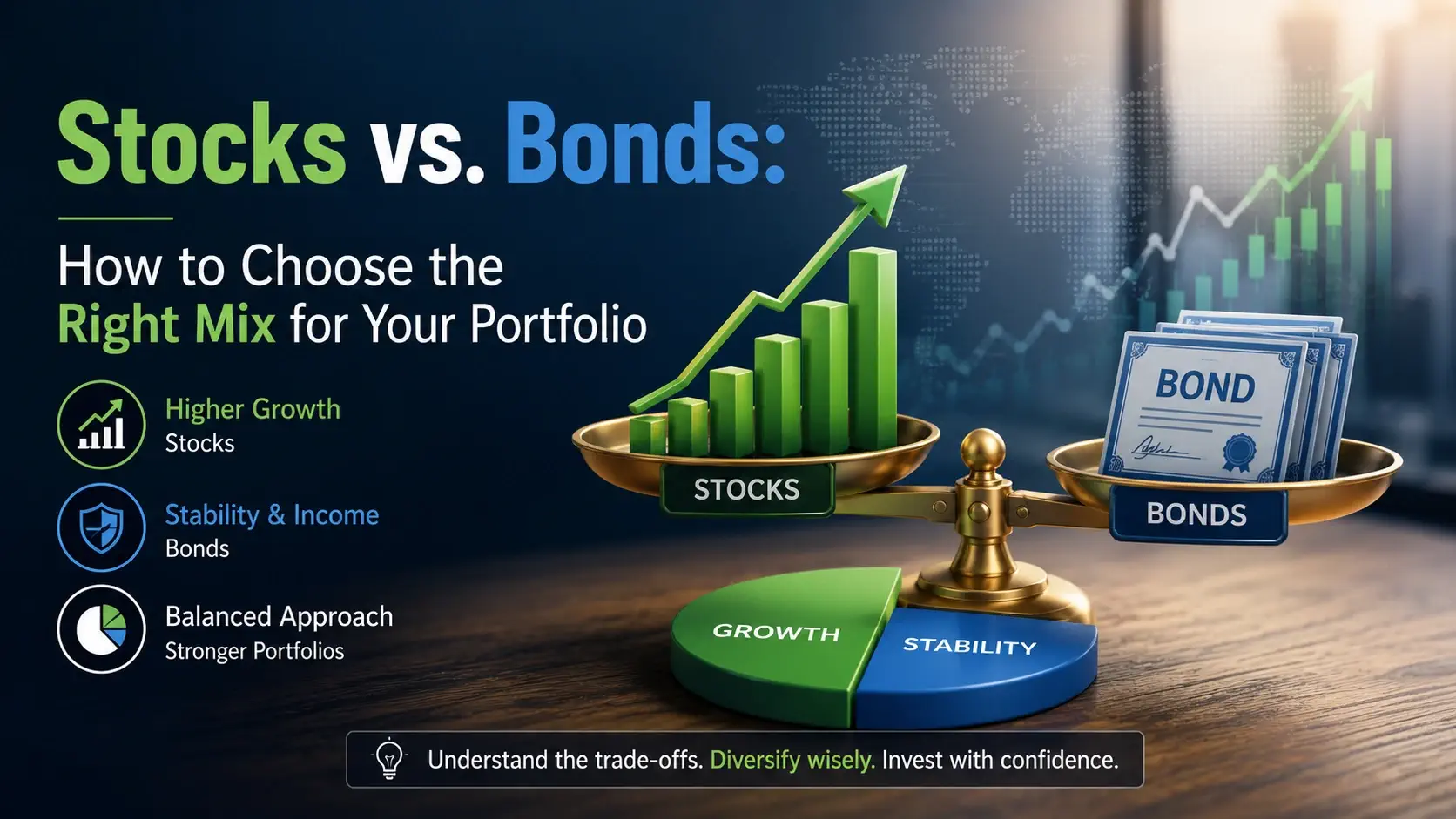
- Stocks (equities) are ownership shares in a company; higher long-term growth potential paired with higher volatility
- Bonds are loans to governments or corporations that pay fixed interest; they generally have lower risk and lower return than stocks
- Real estate, physical property, or real estate investment trusts (REITs) that generate income and/or appreciate over time
- Mutual funds and ETFs are pooled investment vehicles that hold a diversified basket of stocks or bonds, reducing single-stock risk
- Retirement accounts (401(k), IRA) are tax-advantaged accounts specifically designed to hold a mix of the above for long-term growth
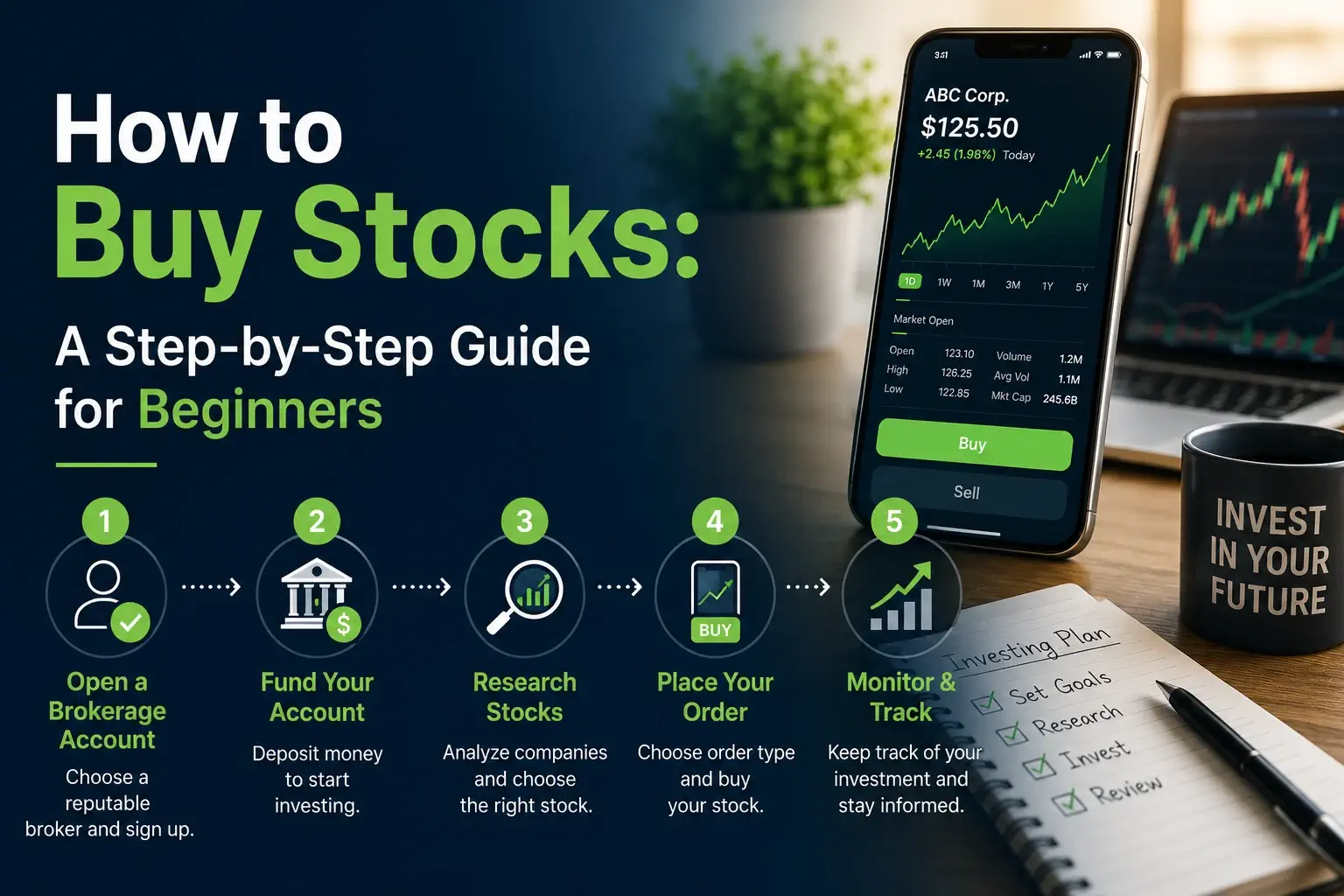
How to Start Investing: A Practical Framework
Step 1: Build a Baseline Emergency Fund First
Before investing aggressively, most financial professionals recommend setting aside three to six months of essential expenses in a liquid, accessible account to protect your investments from needing to be sold during a personal financial emergency.
Step 2: Take Advantage of Employer-Sponsored Retirement Accounts
If your employer offers a 401(k) match, contributing enough to capture the full match is effectively a guaranteed return on your money before any market growth even occurs. The 401(k) contribution limit for 2026 is $24,500 for workers under 50, with an additional $8,000 catch-up contribution allowed for those 50 and older.
Step 3: Choose Low-Cost, Diversified Investments
For most new investors, low-cost index funds or ETFs that track a broad market index such as the S&P 500 offer instant diversification without the cost or complexity of actively managed funds. Low-cost S&P 500 index funds can carry expense ratios as low as 0.015 percent annually, compared to actively managed mutual funds that often charge significantly more.
Step 4: Automate and Stay Consistent
Dollar-cost averaging, investing a fixed amount on a regular schedule regardless of market conditions, removes emotion from the process and reduces the risk of mistiming the market.
Step 5: Increase Contributions Over Time
As income grows, gradually increasing the percentage allocated to investments accelerates long-term wealth-building without requiring a dramatic lifestyle change.
Common Investing Mistakes to Avoid
- Trying to time the market, attempting to predict short-term peaks and dips, is notoriously unreliable, even for professional investors.
- Money you’ll need for short-term cash needs belongs in savings accounts, not in volatile markets.
- Ignoring fees, high expense ratios compound negatively over decades, just as returns compound positively.
- Lack of diversification, concentrating too heavily in a single stock or sector, increases risk without necessarily increasing expected return.
- Letting emotion drive decisions, panic-selling during downturns, locks in losses that a long-term, diversified portfolio would otherwise recover from over time.
Conclusion: Time in the Market Beats Timing the Market
Investing is not about predicting the next big winner or chasing short-term gains; it’s about consistently putting money to work in diversified assets and allowing compound growth to do the heavy lifting over years and decades. With historical market averages near 10% annually, and tax-advantaged retirement accounts offering a structured starting point, the barrier to entry has never been lower. The biggest risk isn’t market volatility; it’s staying out of the market entirely while inflation quietly erodes the value of money left uninvested.
Ready to start investing? Review whether you’re capturing your full employer 401(k) match, open a low-cost brokerage or retirement account if you haven’t already, and commit to a fixed, automated contribution this month; even a modest amount compounds meaningfully over time.
Important Outbound Link
- Anchor text: “data from the SEC’s research on U.S. households’ capital market participation”
- URL: Best placement: in the “” section, to back the stock-ownership statistics with a primary federal regulatory source.